
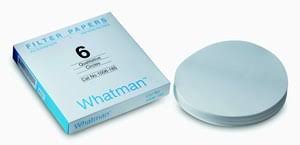
Cellulose filters are used in qualitative analytical techniques to determine and identify materials.
Prepleated qualitative filters are available, which give improved flow rate and increased loading capacity compared to equivalent flat filters.
| Variation Codes | 1006-090 |
|---|
Based on 0 reviews
Be the first to review “Qualitative Filter Papers-Grade 6: 3μm”
Related products
-
-
Whatman
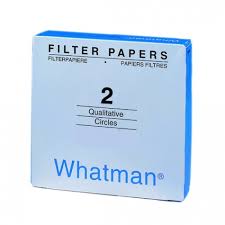
Qualitative Filter Papers – Grade 2: 8µm
Slightly more retentive than Grade 1 with a corresponding increase in filtration time (i.e., slightly slower filtration speed).
More absorbent than Grade 1. In addition to general filtration in the 8 μm particle size range, the extra absorbency is utilized, for example, to hold soil nutrient in plant growth trials.
Also used for monitoring specific contaminants in the atmosphere and in soil testing.
SKU: n/a -
Whatman
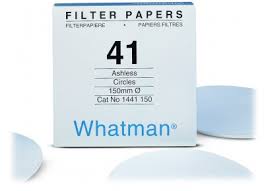
Quantitative Filter Papers-Grade 41: 20μm
Grade 41: 20 μm*
The fastest ashless filter paper, recommended for analytical procedures involving coarse particles or gelatinous precipitates (e.g. iron or aluminum hydroxides).Also used in quantitative air pollution analysis as a paper tape for impregnation when
determining gaseous compounds at high flow rates.SKU: n/a -
Whatman
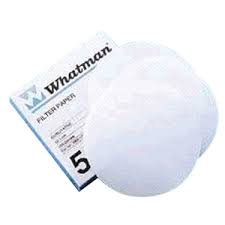
Qualitative Filter Papers-Grade 5: 2.5μm
Grade 5: 2.5 μm*
The maximum degree of fine particle filtration in the qualitative range.Capable of retaining the fine precipitates encountered in chemical analysis.
Slow flow rate.
Excellent clarifying filter for cloudy suspensions and for water and soil analysis.
Also available prepleated as Grade 5V.
SKU: n/a
There are no reviews yet.