
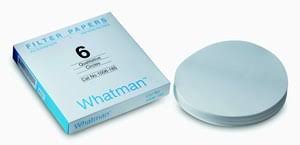
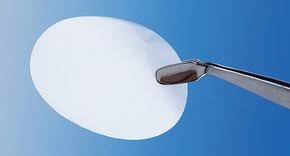
Cellulose filters are used in qualitative analytical techniques to determine and identify materials.
Prepleated qualitative filters are available, which give improved flow rate and increased loading capacity compared to equivalent flat filters.
| Variation Codes | 1006-090 |
|---|
Based on 0 reviews
Be the first to review “Qualitative Filter Papers-Grade 6: 3μm”
Related products
-
Whatman
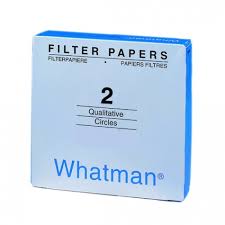
Qualitative Filter Papers – Grade 2: 8µm
Slightly more retentive than Grade 1 with a corresponding increase in filtration time (i.e., slightly slower filtration speed).
More absorbent than Grade 1. In addition to general filtration in the 8 μm particle size range, the extra absorbency is utilized, for example, to hold soil nutrient in plant growth trials.
Also used for monitoring specific contaminants in the atmosphere and in soil testing.
SKU: n/a -
-
Whatman
Nuclepore Track-Etched PC Membranes
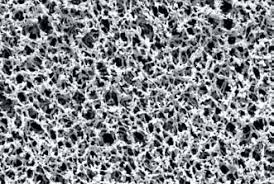
Nuclepore track-etched polycarbonate membranes are manufactured from high-quality polycarbonate film and have sharply defined pore sizes, high flow rates, and excellent chemical and thermal resistance.
The membranes have a smooth flat surface and exhibit very low levels of extractables.
SKU: n/a
There are no reviews yet.