
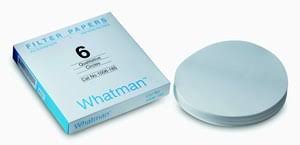
Qualitative Filter Papers-Grade 6: 3μm
10 in stock
Grade 6: 3 μm*
Twice as fast as Grade 5 with similar fine particle retention.
Often specified for boiler water analysis applications.
Rs.1,642.50 Rs.2,190.00
Cellulose filters are used in qualitative analytical techniques to determine and identify materials.
Prepleated qualitative filters are available, which give improved flow rate and increased loading capacity compared to equivalent flat filters.
| Variation Codes | 1006-090 |
|---|
Based on 0 reviews
Be the first to review “Qualitative Filter Papers-Grade 6: 3μm”
Related products
-
Whatman
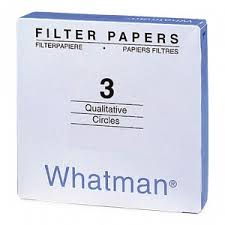
Qualitative Filter Papers-Grade 3:6μm
Grade 3: 6 μm, (Medium flow, thick filter paper)
Double the thickness of Grade 1 with still finer particle retention and excellent loading capacity; more precipitate can be held without clogging.
The extra thickness gives increased wet strength and makes this grade highly suitable for use in Büchner funnels.
The high absorbency is particularly valuable when the paper is used as a sample carrier.
SKU: n/a -
Whatman
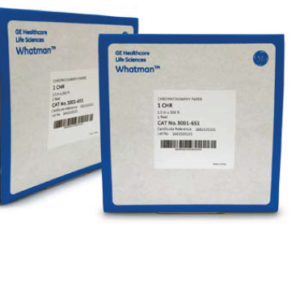
Chromatography Papers-Grade 1 CHR
Whatman chromatography paper media are made from specially selected cotton cellulose.
They are rigorously quality controlled for characteristics important to the chromatographer and to ensure uniformity within
the grade.Features and benefits
• Pure cellulose produced entirely from the highest quality cotton linters
with no additives of any kind
• Manufactured and tested specifically for chromatographic techniques –
this ensures the wicking capability and uniformity of capillary action that
are important in chemical separations
• Also widely used in protein and nucleic acid blottingSKU: n/a -
Whatman
Qualitative Filter Papers-Grade 93: 10 μm
Grade 93: 10 μm*
This filter paper is intermediate in speed and retention between Grades 1 and 4.Available in a dispenser pack, which can be attached to the wall or bench, placed on a
shelf either upright or flat, and used as a normal carton or as a convenient dispenser.The envelopes are released individually for easy one-at-a-time removal.
Package and envelopes are clearly marked for size and content.
SKU: n/a -
Whatman
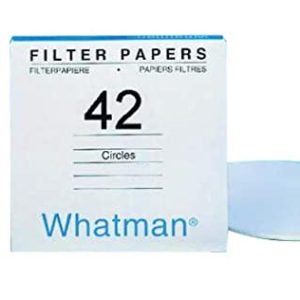
Quantitative Filter Papers-Grade 42: 2.5μm
Grade 42: 2.5 μm*(Ashless Grades)
Used for critical gravimetric analysis with the finest particle retention of all
Whatman cellulose filter papers.Typical analytical precipitates include barium sulfate, metastannic acid, and finely precipitated calcium carbonate.
SKU: n/a
There are no reviews yet.